James Watson Biography - Facts, Childhood, Family Life & Achievements
James Watson Biography
(Molecular Biologist Who Co-discovered the Double Helix Structure of DNA With Francis Crick)Birthday: April 6, 1928 (Aries)
Born In: Chicago, Illinois, United States
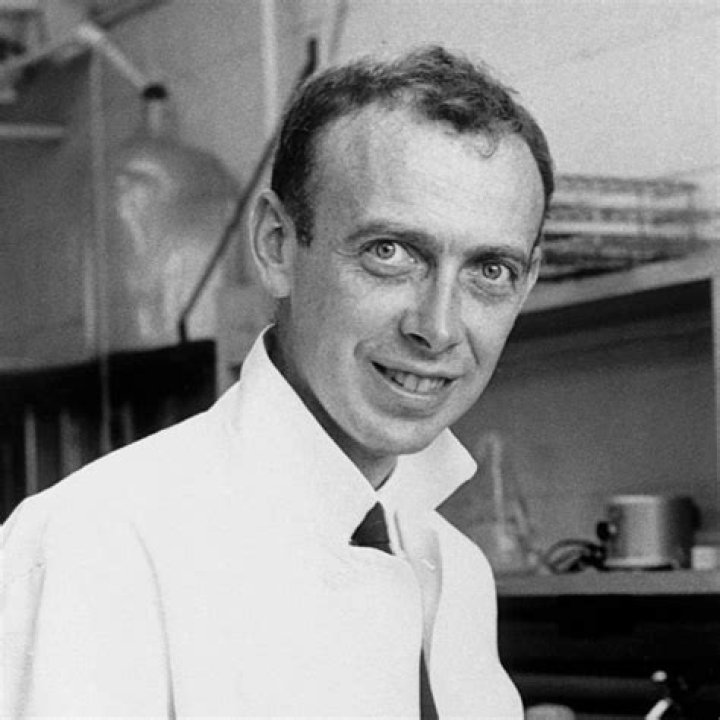
Advanced SearchJames Dewey Watson is an American molecular biologist, geneticist and zoologist. He is credited for co-discovering the molecular structure of deoxyribonucleic acid (DNA), a substance that is the basis of heredity. His discovery has been described by other biologists and Nobel laureates as the most important scientific discovery of the 20th century. He was born in Illinois to James D. Watson and Jean Mitchell. Growing up, James Dewey Watson spent hours bird-watching and decided to major in ornithology but Erwin Schrodinger’s book titled ‘What is Life’ had such a profound impact on him that he chose genetics in the end. He received his B.S. degree from the University of Chicago, and his PhD from Indiana University. He was strongly opposed to the belief that genes were proteins that could replicate and DNA was a simple tetranucleotide that supported the genes. James’ perception, influenced by the discoveries and lectures of that time, was that DNA was indeed the genetic molecule. He finally found success with Francis Crick and Maurice Wilkins, when the trio discovered the double helix structure of the DNA molecule. For this discovery James Dewey Watson, Francis Crick and Maurice Wilkins earned the Nobel Prize for Physiology or Medicine in 1962
Quick FactsAlso Known As: James Dewey Watson
Age: 95 Years, 95 Year Old Males
Family:Spouse/Ex-: Elizabeth Watson
father: James D. Watson
mother: Jean Mitchell
siblings: Elizabeth Jean Watson
children: Duncan James Watson, Rufus Robert Watson
Born Country: United States
Quotes By James Watson Zoologists
City: Chicago, Illinois
Ancestry: British American, Irish American
Grouping of People: Nobel Laureates In Physiology
U.S. State: Illinois
discoveries/inventions: Discovery Of The Structure Of DNA, Which Was Published In 1968
More Factseducation: Indiana University, University Of Chicago
awards: 1962 - Nobel Prize in Physiology or Medicine
1960 - Albert Lasker Award for Basic Medical Research
2002 - Gairdner Foundation International Award
1977 - Presidential Medal of Freedom
1993 - Copley Medal
1965 - Guggenheim Fellowship for Natural Sciences
US & Canada
1971 - John J. Carty Award for the Advancement of Science
1997 - National Medal of Science for Biological Sciences
Recommended For You
Recommended Lists:
American PeoplePhysiciansGeneticistsNon-Fiction WritersMolecular Biologists Childhood & Early LifeJames Watson was born on April 6, 1928 in Chicago, Illinois. His father, James D. Watson was a businessman and his mother’s name was Jean Mitchell.He attended Horace Mann Grammar School for eight years and South Shore High School for two years. For further education he went to the University of Chicago on a tuition scholarship in 1943.He graduated from Chicago University with a B. S. degree in Zoology in 1947. He could pursue his dream of studying genetics when Indiana University awarded him a fellowship.He did his PhD research at Salvador Luria’s (also his doctoral advisor) laboratory. Luria was one of the leaders of the new Phage group, a movement of geneticists from experiential system to microbial genetics.In those times the prevalent notion was that genes were proteins which could replicate and DNA was the structure that supported it. However, Avery-Macleod-McCarty’s experiment led Watson to believe that DNA was indeed the genetic molecule.His doctoral thesis was on the effect of hard X-rays on bacteriophage multiplication, inspired from geneticists H. J. Muller and T. M. Sonneborn and microbiologist Max Delbruck. He graduated with a PhD in Zoology in 1950.For his post doctoral research he went to Copenhagen University for a year to work with biochemist Herman Kalckar at his laboratory. But as the field of interest differed for both, Watson shifted his workplace after some months.His new partner was microbial physiologist Ole Maaloe and they did several experiments to explore the structure of the DNA. After much hard work and deliberation they accepted that the result of their first attempt was inconclusive.